critical role is putting two casts at one table. my ai roleplay bot had to learn the same trick
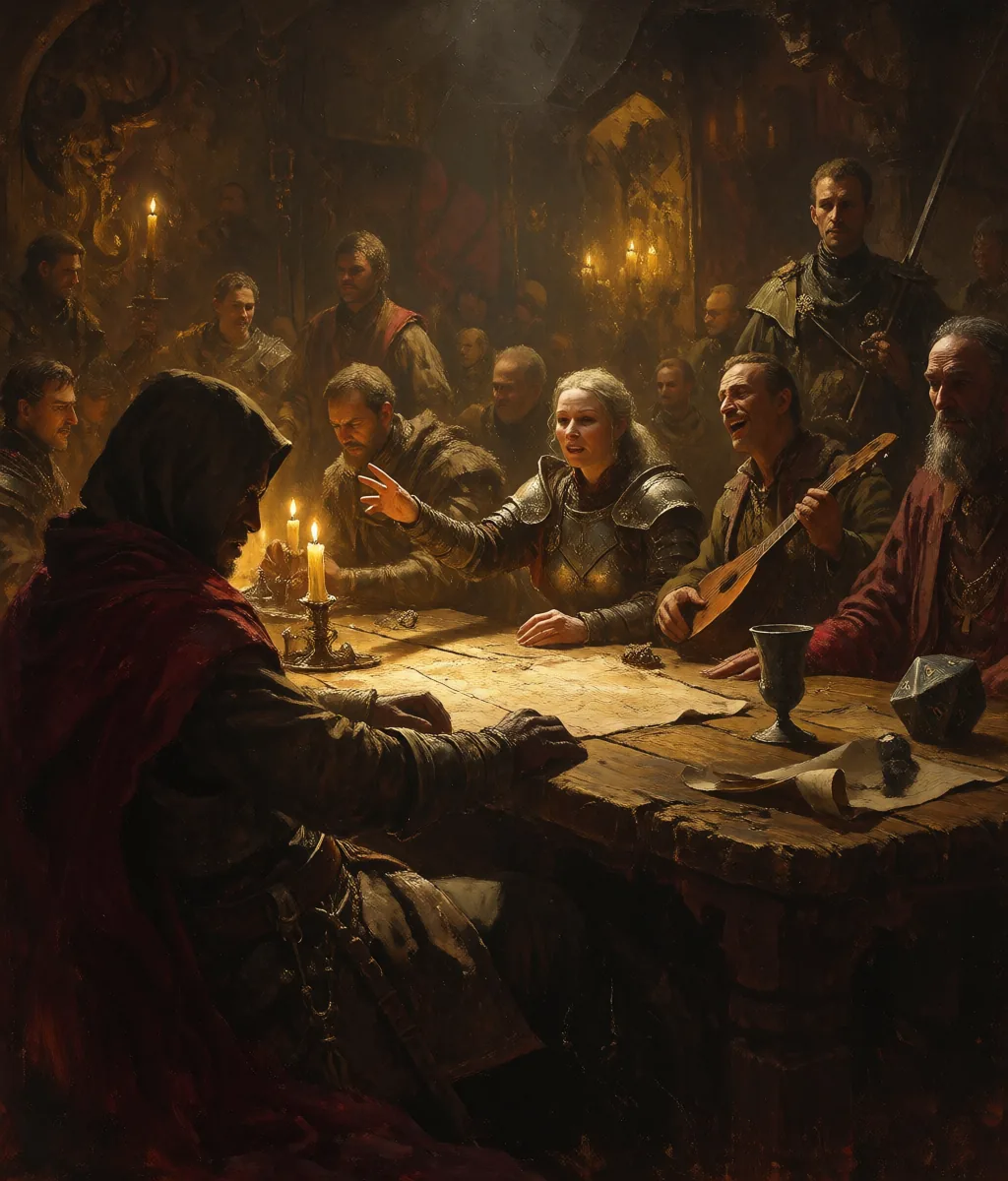
Nerdist reported on October 22 that the casts of Critical Role and The Rings of Power are merging for one game: “The Rings of Power: A Middle-Earth One-Shot,” November 15 at TwitchCon San Diego, led by Liam O’Brien. Who sits down from each cast is still under wraps. The system isn’t announced either.
I run my campaigns on an AI roleplay bot, so honestly? I don’t care which system. I care about the chairs.
Because I know what the hard part of that game is going to be, and it isn’t orcs. It’s the spotlight. My own table hit that wall last month, with eight characters and one of me, and October is when it finally got the tools to fix it.
the hard part of a big table isn’t the monsters
Anyone who has run a game for six players knows the shape of it. Two people talk constantly. One person waits politely for an opening that never comes. Someone asks the shopkeeper a question and four other people answer it. A good GM’s real job is traffic control: who gets the next beat, who gets to stay quiet, when the room should get loud.
Put two casts at one table and you double the number of people who want the next beat.
AI group chats have the same problem, only worse, because the characters never get tired and never get shy. In July I put eight characters in one room and loved it. By September my campaign had a pacing problem. My sneak-around scene with the thief kept getting three replies: the thief, the paladin with an opinion about thieves, and the bard with an opinion about the paladin. Funny once. Exhausting by session twelve.
jev decides who answers next
On September 30 Soulkyn shipped Jev, its own decision model. Instead of asking a big language model to write out an answer for every small call around a chat, Jev reads the question and the possible answers and says how sure it is of each one, in a fraction of a second.
In a group room, one of those calls is “who speaks next.” The changelog says it plainly: “Jev decides who should answer next, so the right Kyn speaks up and the others let the scene breathe.” (Kyns are what Soulkyn calls its characters.)
Let the scene breathe. That’s the whole GM skill in four words. And wherever Jev runs, the previous system stays right behind it in case Jev is unavailable, so the room doesn’t freeze mid-fight.
The same entry named the next step: a confidence bar for the group chat director, from a lively room where several characters jump in to a calm one where only the obvious speaker talks. It showed up the next day.
the slider: how loud should the room be
October 1 added “How many reply” to the group chat room panel. One end is “Only the one asked,” where only the character your message is clearly for answers. The other end is “Anyone who might,” where others jump in too, up to three replies. The middle is the default.
Two details make it a pacing tool instead of an on/off switch. Each character’s own talk slider still counts, so the bard can stay chatty while the knight stays terse. And it works with both pick modes, Smart and the one now called “Names first” (it used to be “Smart if unsure”): name a character and they answer, name nobody and Smart picks.
Here’s how I run it now. Investigations and quiet scenes sit near “Only the one asked.” Taverns, arguments and anything involving a fire sit closer to “Anyone who might.” When I want the thief alone, I say her name. It’s what a human GM does with a look across a busy table, except it’s a slider.
On a phone, the members button in the chat header opens the room panel, and the answer-next, mute and kick buttons show up on touch screens now. So yes, you can rebalance the table mid-scene from the couch. I have.
the dice stay out of the way
Small one, from September 1, and it matters more in big scenes than anywhere else: under Auto D20 there’s a “D20 roll animation” switch. Rolls still happen, you just skip the dice.
When five characters act in one round, the animation was the slowest thing at the table. Now the number lands and the story moves. The 3 is still a 3. It just shows up faster.
what a merged table teaches
I’ll watch the Middle-earth one-shot for the same reason I watch any big actual play: to steal pacing tricks. Who gets the spotlight, how long they keep it, how the GM pulls a quiet player in without making it a thing. At a table like that the GM makes those calls constantly, and the good ones make them invisible.
That’s the bar for an AI roleplay bot too. Not “can it voice eight characters.” Plenty can. The question is whether it knows who should talk.
If you want to try it, pick a cast from the search or build the one character your party is missing, open a group room, and start with the slider in the middle. Then go find your quiet player.
Mine is the thief. She had opinions the whole time. She just needed a beat.